One of the main reasons why travellers decide against taking the train is unreliability in some countries. Especially when a connection has to be caught, stress seems almost inevitable for many passengers. But how justified is this fear of changing trains? Are trains really as unreliable as they are often said to be? To find out, I documented all of my rail journeys in 2025, just as I did in 2024 (you can find the article here). The list mainly focuses on trains in Austria, Germany and Switzerland as well as night trains as a separate category.
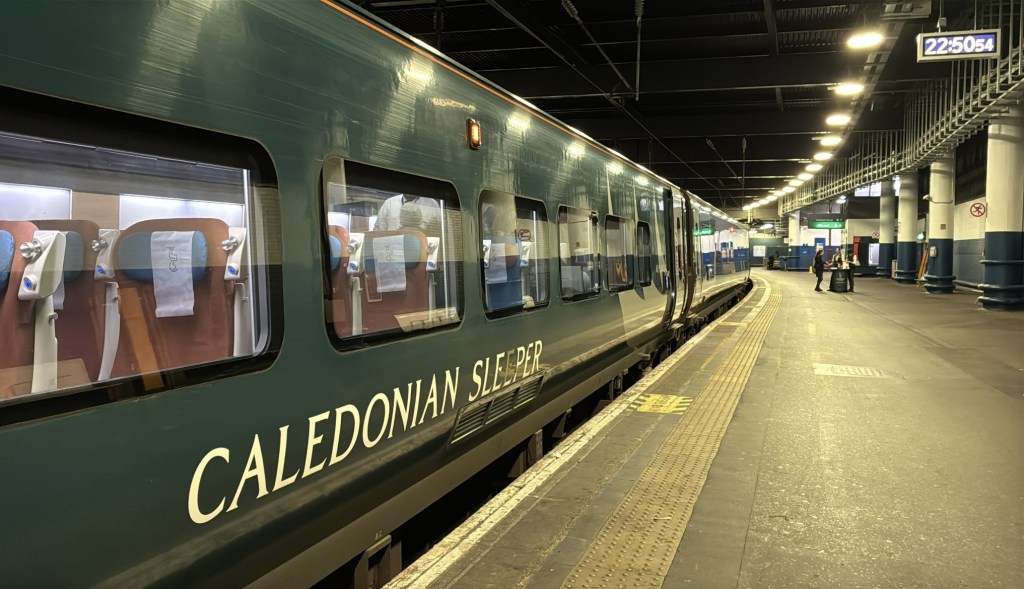
Official delay statistics for 2025
Before getting to my own results, let’s take a brief look at the publicly available statistics for 2025.
ÖBB:
The Austrian Federal Railways once again stood out in 2025 with a high level of punctuality. The least punctual month was June, with 92.6% trains on time, while February – despite cold weather and snow – was the most punctual month at 95.4%. In local passenger transport, punctuality reached as high as 95.9% in February. Only long-distance services showed lower figures: Here, the best month was December, with 85.3% of trains arriving within the five-minute tolerance threshold (ÖBB, n.d.).
DB:
While punctuality in local passenger transport was still relatively good at 90.4% in February, Deutsche Bahn’s major issues become apparent in long-distance services. In this segment, only between 51.5% (October) and 66.9% (January) of passengers reached their final destination with a delay of less than six minutes (DB, n.d.).
SBB:
Swiss Federal Railways achieved their highest punctuality ever in 2025. Over the course of the year, 94.1% of all passenger trains reached their destination within the three-minute tolerance threshold. Particularly noteworthy is Switzerland’s connection reliability: 98.6% of all planned transfers were successful in 2025 (SBB, 2026). In local passenger transport, the average punctuality rate was 94.4%, while 92.7% of long-distance trains arrived on time (SBB, n.d.).
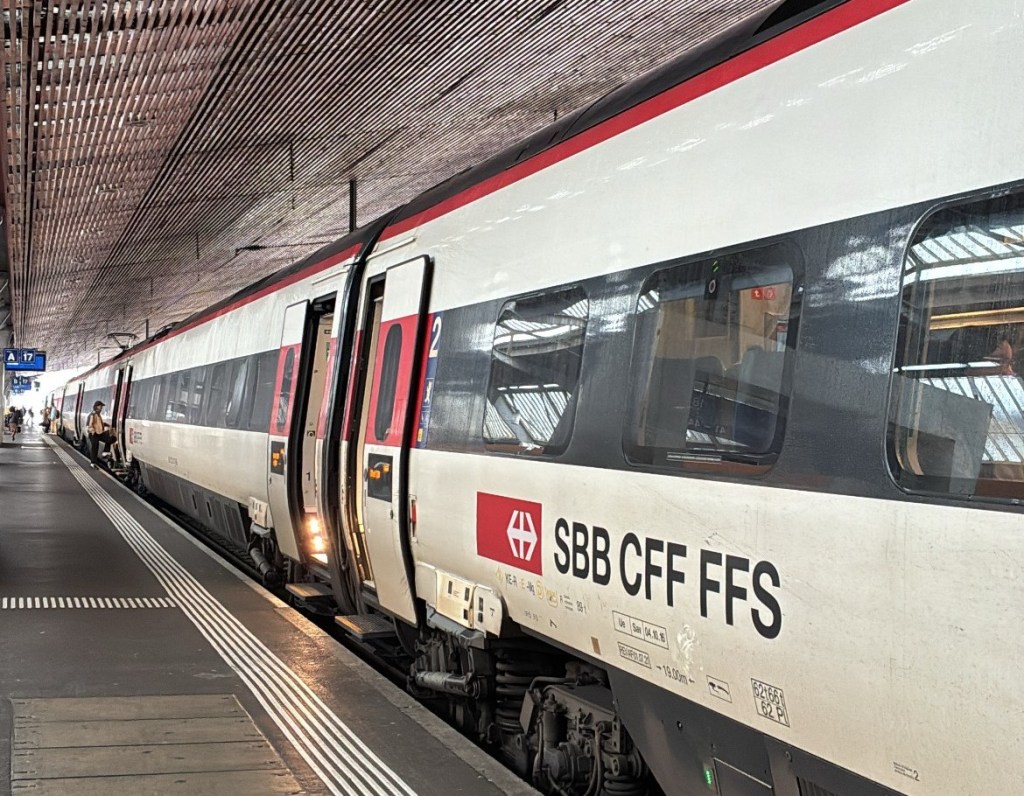
My delay statistics for 2025
Local trains and long-distance trains:
In the whole of 2025, I travelled on 211 trains in Europe. 71 of these can be classified as local trains and the other 140 as long-distance trains (including night trains). This results in the following overview of punctuality:
| countries | % of local trains on time | Ø min of late arrival of local trains | % of long-distance trains on time | Ø min of late arrival of long-distance trains |
| Austria | 87.50 | 1.19 | 77.77 | 5.56 |
| Switzerland | 81.25 | 1.06 | 85.00 | 2.23 |
| Germany | 80.00 | 3.67 | 50.00 | 7.5 |
| AT – DE | n.a. | n.a. | 77.77 | 9.33 |
| CH – AT | 100 | 2.0 | 62.86 | 13.89 |
| DE – CH | 93.33 | 1.4 | 100 | 1 |
| Others | 87.50 | 1.5 | 68.18 | 14.77 |
The table clearly shows that in most countries, long-distance transport is significantly more frequently and severely delayed than local transport. Clear differences are particularly noticeable in Germany as well as on routes between Switzerland and Austria. The finding that local trains are generally more punctual than long-distance trains is therefore consistent with the official statistics presented above.
It is also interesting to look at the average minutes that a train arrives later at its destination than the timetable says. While the maximum delay for all considered local trains is just 2 minutes, with the exception of Germany at 3.67 minutes (~220 seconds), the situation is even worse for many long-distance trains. Here, my data shows for example, that on average trains between Switzerland and Austria arrive 13.89 minutes late, as well as 14.77 minutes in other parts of Europe.
Night trains:
This section takes a look at the punctuality of my night train journeys across Europe in 2025. The following 15 trains were analysed:
| train number | route | delay (in min) |
| NJ409 | Zurich – Basel | – |
| Night-ICE1080 | Munich – Hamburg | 3 |
| NJ40420 | Innsbruck – Hamburg | – |
| NJ40491 | Hamburg – Innsbruck | – |
| EN40465 | Zurich – Innsbruck | 5 |
| NJ465 | Zurich – Innsbruck | 12 |
| NJ1465 | Zurich – Innsbruck | 2 |
| Caledonian Sleeper | London – Edinburgh | – |
| Caledonian Sleeper | Glasgow – London | – |
| EN40465 | Innsbruck – Maribor | 2 |
| EN40467 | Innsbruck – Budapest | 30 |
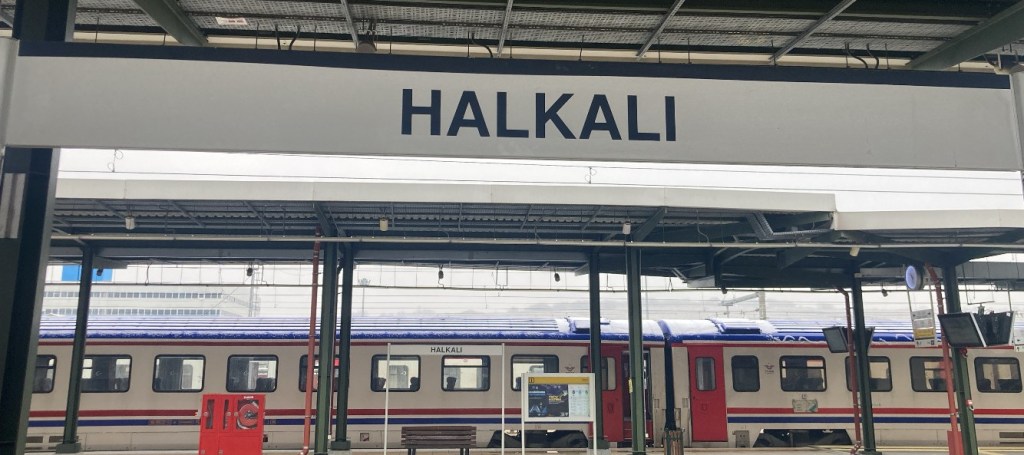
| INT493 | Sofia – Istanbul Halkali | 230 |
| NJ402 | Zurich – Eindhoven | 52 |
| NJ420 | Innsbruck – Amersfoort | 75 |
| NJ40421 | Amsterdam – Vienna | 13 |
The results show that 60% of night trains in 2025 arrived at the station on time (up to max. 5:59 minutes late). This indicates a decline compared to last year (64.29%). Based on my data, on average a night train reached its destination 28.26 minutes later than the timetable says. For comparison: In 2024, it was only 8.93 minutes. It is worth highlighting that the longest delay in 2025 occurred on my trip between Sofia and Istanbul, where the night train was 3 hours and 50 minutes late.
Conclusion
My 2025 data clearly shows that night trains were significantly less punctual than daytime trains. While the highest average delay for all long-distance trains in other parts of Europe was 14.77 minutes, night trains were on average almost twice as late, with 28.26 minutes.
At the same time, a delay on a night train is often less problematic for passengers, as it may simply mean having a bit more time to sleep or enjoy breakfast. During the day, however, delays tend to be more serious, as they can cause passengers to miss important connections.
Furthermore, my data indicates that in 2025, night trains more frequently arrived late at their final destination compared to 2024. Let’s hope this trend moves in the right direction in 2026!
Sources:
DB (n.d.). Erläuterung Pünktlichkeitswerte für den Dezember 2025. Retrieved on 27.01.2026, from https://www.deutschebahn.com/de/konzern/konzernprofil/zahlen_fakten/puenktlichkeitswerte-6878476
ÖBB (n.d.). Pünktlichkeitswerte Österreich. Retrieved on 27.01.2026, from https://www.oebb.at/de/rechtliches/puenktlichkeit/oesterreich
SBB (2026, 27. January). SBB so pünktlich wie nie – trotz vielen Events und Baustellen. Retrieved on 27.01.2026, from https://news.sbb.ch/medien/artikel/139738/sbb-so-puenktlich-wie-nie-trotz-vielen-events-und-baustellen
SBB (n.d.). Pünktlichkeit. Retrieved on 27.01.2026, from https://reporting.sbb.ch/puenktlichkeit
 Nights on Tracks
Hinterlasse einen Kommentar