It sounds like a journey back in time: By train from the Thames in London to the Bosporus in Istanbul, which separates the continents of Europe and Asia. While the journey by Orient Express was revolutionary back in the 1880’s, hardly anyone today would think of covering the 2.500 km linear distance by rail. But by flying you miss out on numerous impressions that reflect the diversity of Europe. In the following lines, I will take you on my 8-day adventure trip across Europe and give you valuable tips and inspiration for an unforgettable Interrail adventure.
Day 1: London St. Pancras – Amsterdam – Vienna
The alarm clock rings early on this midweek morning in the beginning of February. And there’s a reason for that: The Eurostar journey, which has long been on my bucket list, is coming up. Departure is at 06:16, but first I have to go through the security check. The reason for this is simple: Great Britain is not part of the EU and is not in the Schengen area. Then it’s finally time to board the first train of the journey from London to Amsterdam. This involves crossing the 50 km long Channel Tunnel. Tip: The Eurostar is one of the most expensive trains in Europe, but with an Interrail ticket you only have to pay a surcharge of 37€ for a seat reservation for the 4-hour journey to the Dutch capital.
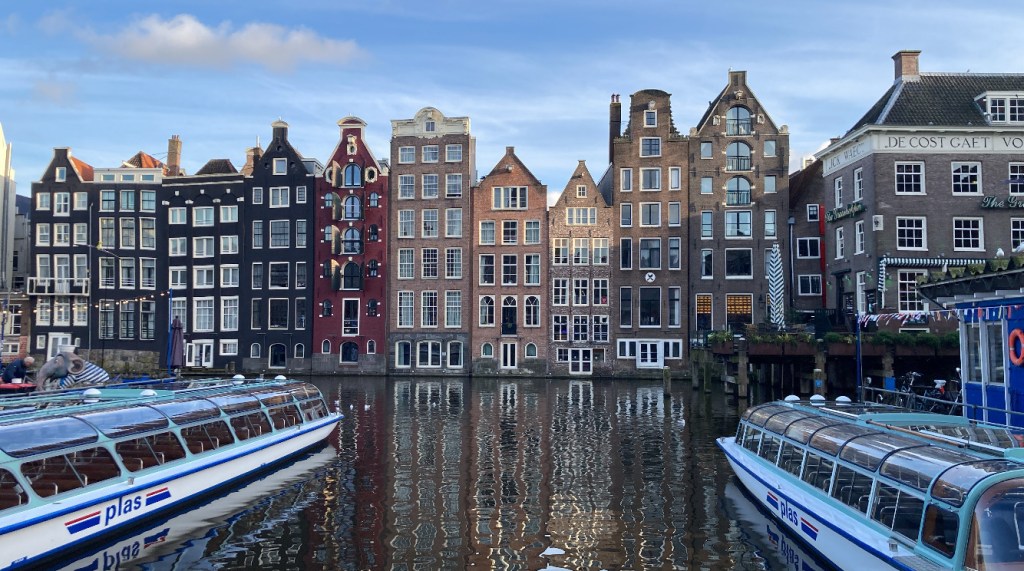
The sunny afternoon in the Dutch capital is perfect for a sightseeing tour including a boat canal cruise. Fortified with a delicious portion of fries, I continue on the ÖBB Nightjet towards Austria at 19:00. I spend the night in a 6-seater carriage and am lucky because no other passengers are boarding. After more than 14 hours, it’s time to leave the night train.
Day 2: Vienna – Budapest – Bucharest
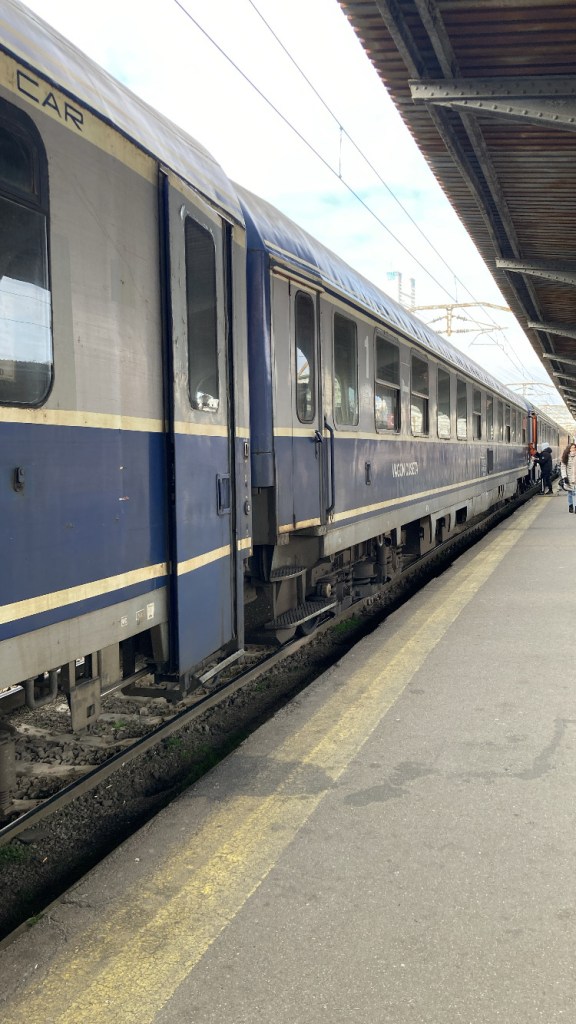
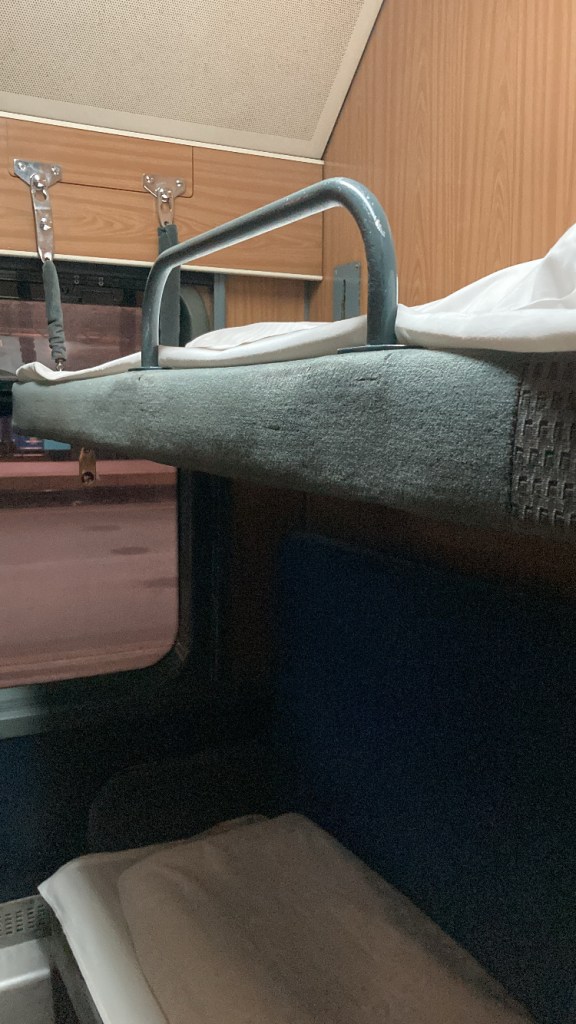
As breakfast is not included in the coach, now is the time to make up for it. In general, Vienna is a paradise for food lovers. In addition to the famous Hotel Sacher, which claims to serve the Sachertorte according to the original recipe, the Wiener Schnitzel is also world-famous. Well fortified, I continue towards Hungary in the afternoon. Fortunately, the train connections between Vienna and Budapest are really good. I arrive at Budapest-Keleti station at 17:19. The station is an imposing building, both inside and out, which was opened to passenger traffic in 1884 (Woods, 2024). From here I take the 19:10 night train to Bucharest. I spend the next 15,5 hours in the private sleeper compartment, which has an en suite washbasin. The toilets, on the other hand, are at the end of the corridor. The fact that no other compartments in my carriage were occupied promised a quiet night. The recent abolition of border controls between Hungary and Romania also contributed to this.
Day 3 & 4: Bucharest
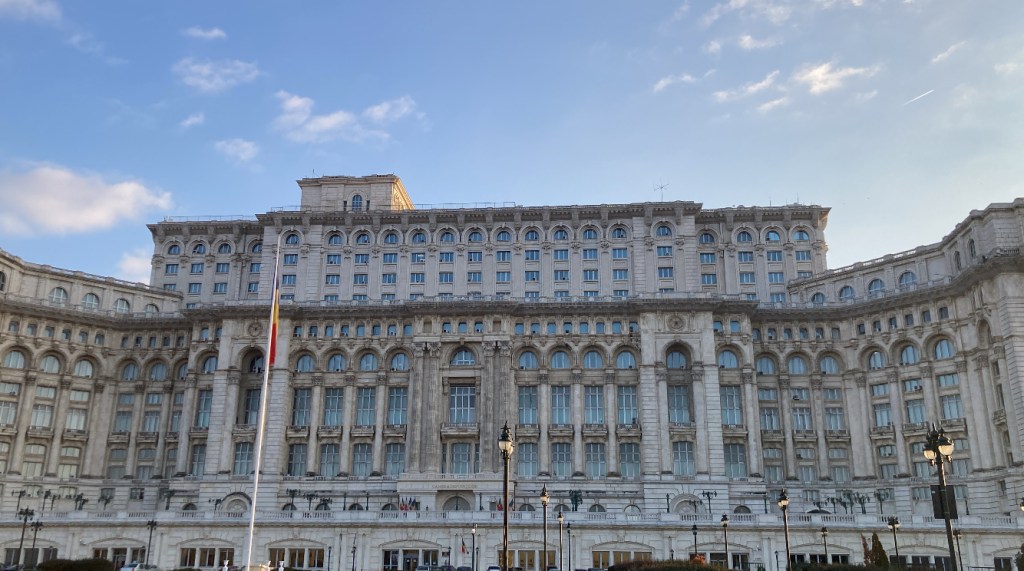
My overnight train IC473 reached the Romanian capital 27 minutes late. Here I decided to spend two nights in a hotel to take a closer look at the city. The most famous building here is the Palace of Parliament, which is also the heaviest building in the world (Hartmann, 2024). The city center also has numerous restaurants and a lively nightlife to offer. Another attraction is the modern thermal spa near the airport, which is open daily and is Europe’s largest wellness oasis according to GetYourGuide (n.d.).
Day 5: Bucharest – Sofia
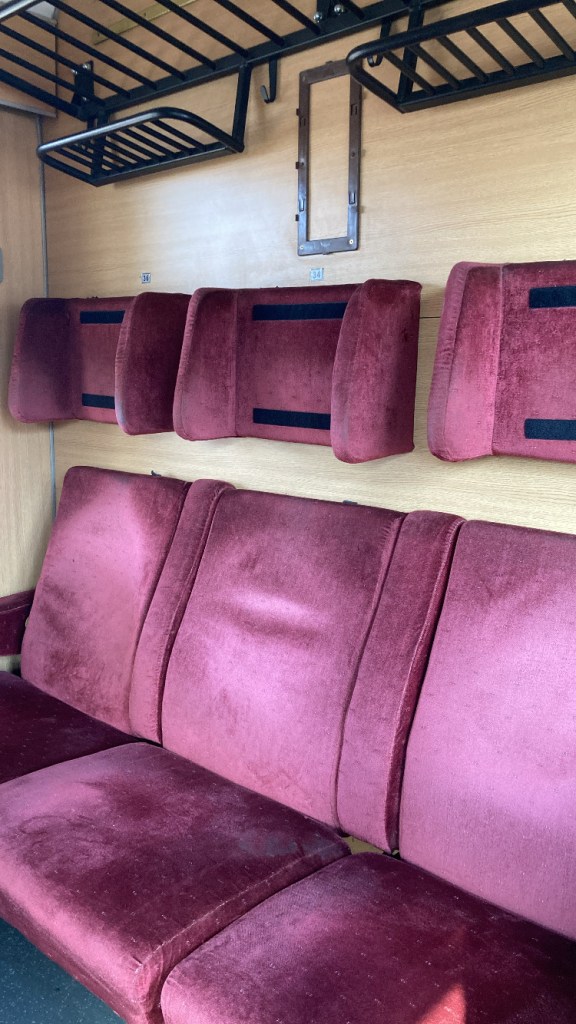
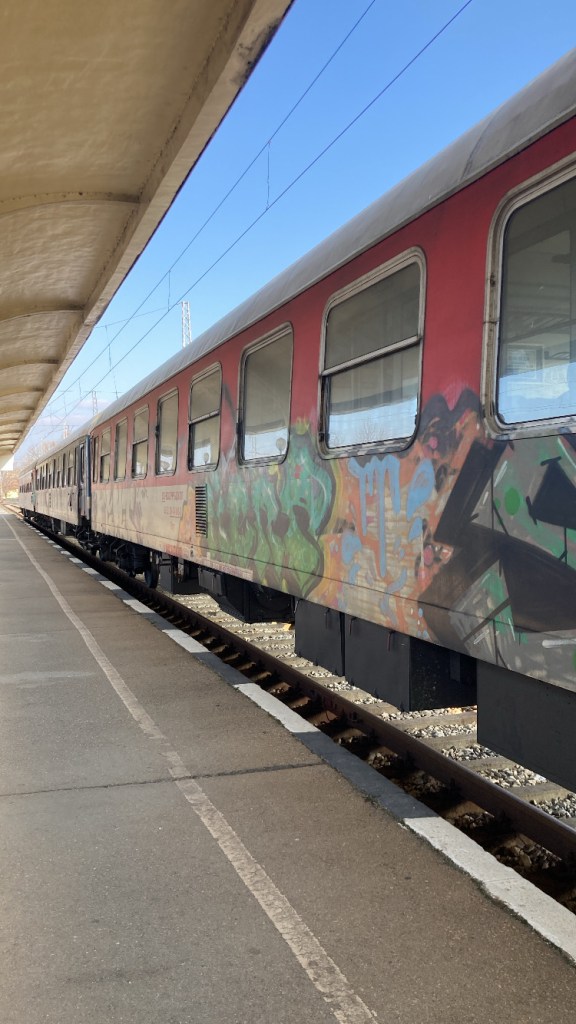
On day five of the trip, it’s time to leave Bucharest and board the train to Bulgaria at 10:11. More precisely, the INT1095 train, which takes me to Ruse on the Bulgarian border. Once there, I have to change trains, as there are no continuous train connections between Bucharest and Sofia during my travel time. For the second leg of the journey on this Sunday, I decide to travel first class for a small surcharge. A good investment, as it turned out during the journey, as the train filled up more and more the closer I got to Sofia. In 1st class, you travel in a 6-person compartment here, whereas in 2nd class there are 8 people in the compartment. After a good 10,5 hours in total on the two trains, I finally reach the Bulgarian capital. Tired from the long journey, I go straight to my hotel and enjoy the comfortable bed.
Day 6: Sofia – Istanbul
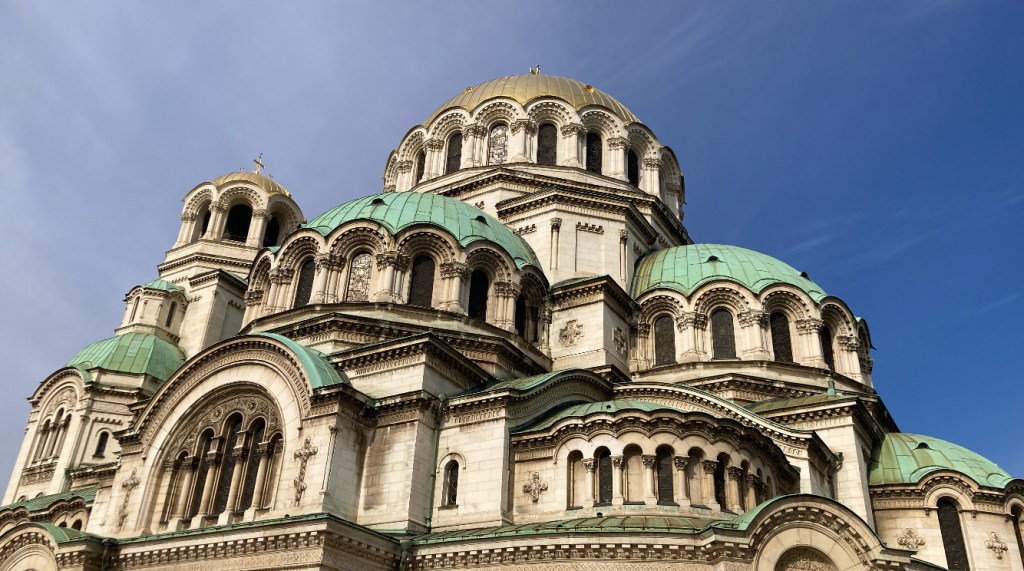
After a good night’s sleep, I set off on a sightseeing tour of Sofia. A city that is best known for the Alexander Nevsky Cathedral. The church has space for over 5.000 people, making it one of the largest Orthodox shrines in the world (Eiselt, 2024). Sofia is also known for its ski resort in the Vitosha Mountains, which is just under an hour away from the city (Urlaub in Bulgarien, n.d.).
At 18:45, the time has come: I board the last train of this impressive journey through Europe. It will take me to Halkali, a district of Istanbul, in almost 11 hours. Once again, I have booked a private compartment in the sleeping car. The facilities in the cabin are impressive: In addition to an en suite washbasin, there is also a small fridge. Moreover, some snacks are provided to welcome me. I get ready for bed early to get a few hours of sleep before the nightly border controls at the Bulgarian and Turkish border.
Day 7 – 8: Istanbul
Arriving in Kapikule at 02:00 at night, the night steward informs me that I must leave the train with my luggage. Shortly afterwards, my passport and luggage are being checked. The procedure is completed within a few minutes so that I can quickly snuggle back into my cozy bed.
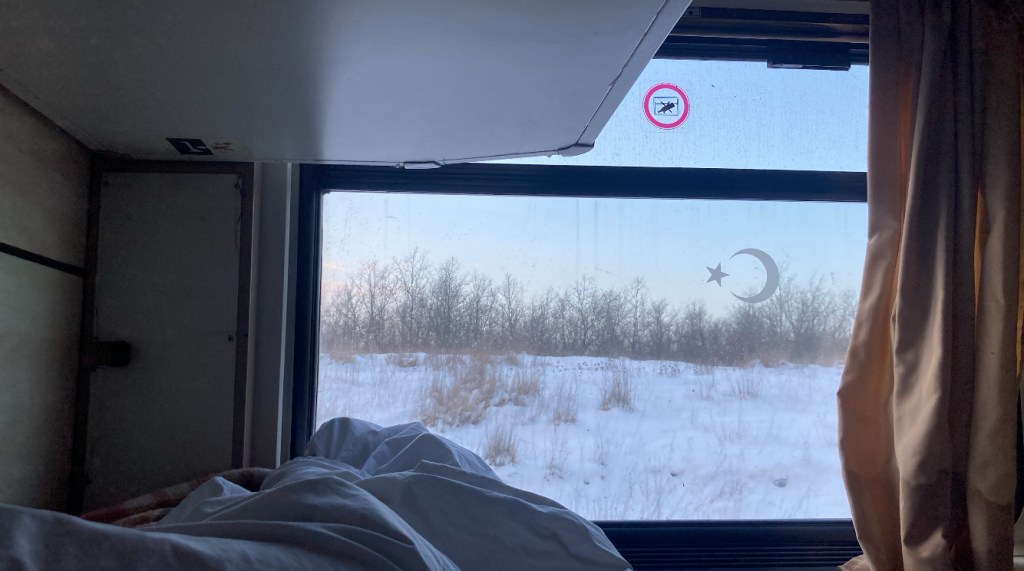
When the alarm clock rings at 06:00, I am amazed to see a white snowy landscape outside. I’m also surprised when I look at Google Maps, because Istanbul doesn’t seem to be anywhere in sight, even though the night train should reach its destination in a good 30 minutes. And Istanbul I reached but with a delay of 3 hours 50 minutes.
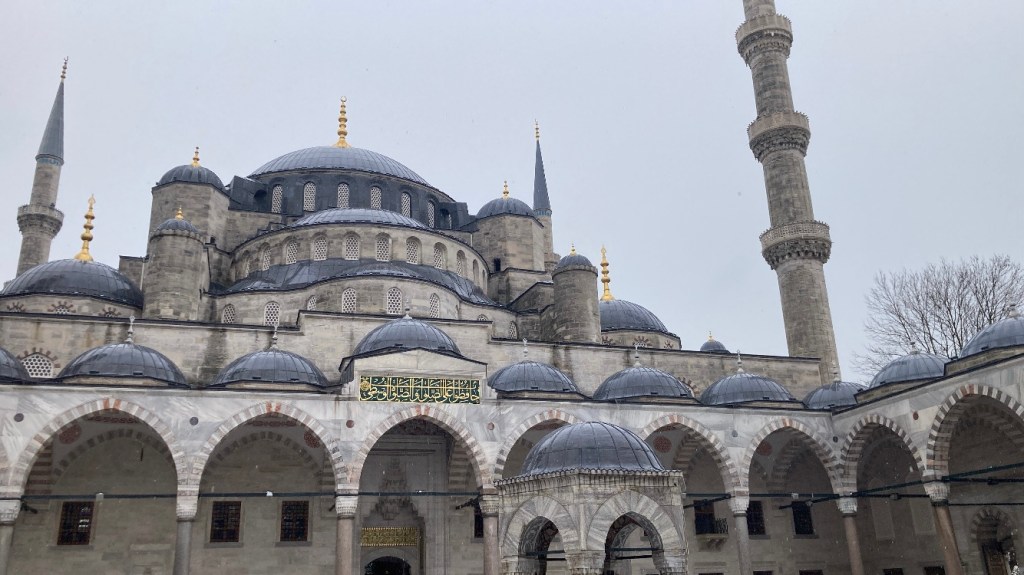
From the Halkali stop, I continue by metro to the city center, which I board full of anticipation about the city on the Bosporus. After checking into the centrally located hotel, it’s time for some sightseeing. The Blue Mosque, also known as the Sultan Ahmed Mosque, is particularly impressive due to its imposing design with six minarets. During my stay, I also let myself drift through the so-called “Kapalı Çarşı” market, which, in addition to selling carpets, various teas and spices, also has a large number of gold and jewelry stores. A boat trip on the Bosporus, which divides Europe and Asia, is also highly recommended. For me, a detour to the Asian part is just as much a part of a visit to Istanbul as observing the numerous street cats, which are usually fed by the locals.
So after eight days, seven countries, three time changes and seven trains, my journey across Europe by rail comes to an end. Inspired by the Orient Express of the 1880’s, I embarked on an unforgettable train journey which, although not as luxurious as life on board this iconic train, was incredibly diverse and exciting. The total cost of the train tickets and reservations was 458€. Of course, a plane ticket would have been much cheaper, but I would have missed out on one thing: Seeing the beauty of Europe with my own eyes and consciously taking the time to travel from A to B.
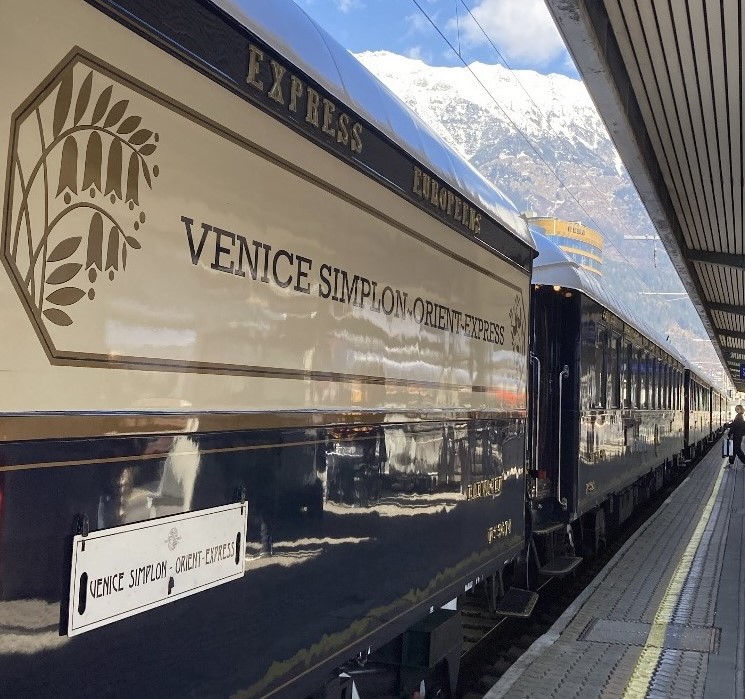
Good to know: The Orient Express still travels to Istanbul these days, but from Paris. The Belmond company offers the trip twice a year. For the five-day trip, however, ticket prices start at 17.500£ (~21.000€) per adult. The most expensive ticket in the Grand Suite, on the other hand, costs as much as 63.000£ (~75.000€) per person (Belmond, n.d.).
Sources:
Belmond (n.d.). Five nights: Paris to Istanbul. Retrieved on 17.03.2025, from https://www.belmond.com/trains/europe/venice-simplon-orient-express/journeys/paris-to-istanbul-2026
Eiselt, D. (2024, 09. July). Alexander-Newski-Kathedrale. Retrieved on 17.03.2025, from https://www.cestee.de/reiseziele/bulgarien/sofia/alexander-newski-kathedrale
GetYourGuide (n.d.). Bukarest: Therme Bukarest Ticket und Transfer. Retrieved on 16.03.2025, from https://www.getyourguide.de/bukarest-l111/bukarest-therme-bukarest-ticket-und-transfer-t350391/?visitor
Hartmann, R. (2024, 11. November). Die tragische Geschichte hinter dem schwersten Gebäude der Welt. Retrieved on 16.03.2025, from https://www.travelbook.de/attraktionen/architektur/tragische-geschichte-schwersten-gebaeude-der-welt
Urlaub in Bulgarien (n.d.). Vitoscha. Retrieved on 17.03.2025, from https://www.urlaub-in-bulgarien.de/vitosha
Woods, J. (2024, 16. August). Budapests ikonischer Keleti-Bahnhof wird 140 – hier sind 8 faszinierende Fakten. Retrieved on 16.03.2025, from https://dailynewshungary.com/de/keleti-railway-station-140-years-old/
 Nights on Tracks
Hinterlasse einen Kommentar