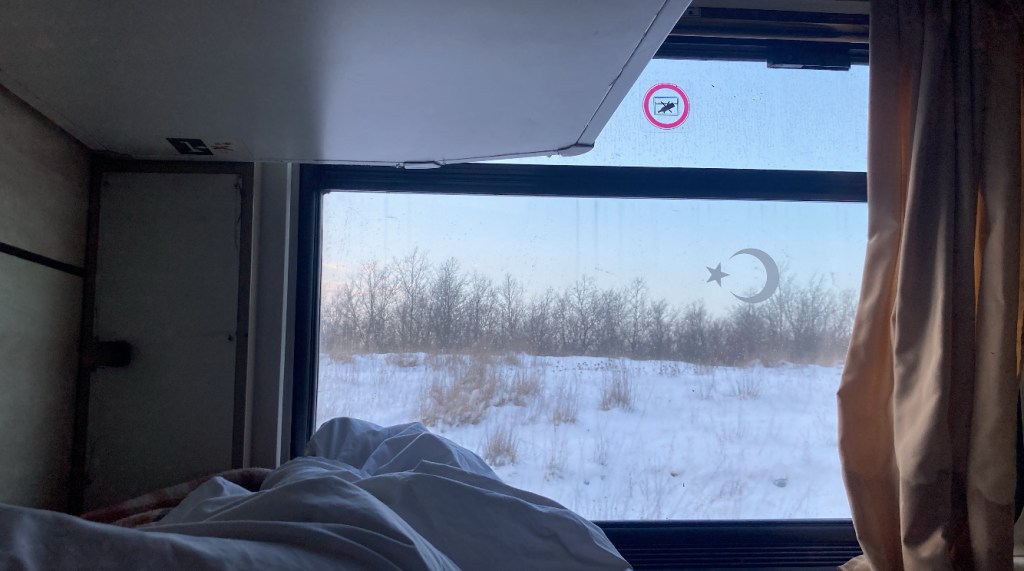
Getting on the train in the evening and waking up in a foreign city in the morning is something that is inspiring more and more people. So you might ask yourself why there aren’t more night train connections in Europe. In this article, you will find out many of the reasons night train operators are confronted with.
Different national regulations
Every country has different regulations for rail transport. These are particularly noticeable in the areas of technology and operation (Allianz pro Schiene, n.d.). Consequently, the operating conditions on the railway change every time a border is crossed. There are over 800 national regulations in Europe. The international deployment of train drivers is also an obstacle. Did you know that they must have at least a B1 language level in order to be authorised to drive in the respective country? (Jaschinksy, 2024).
Different European track gauges
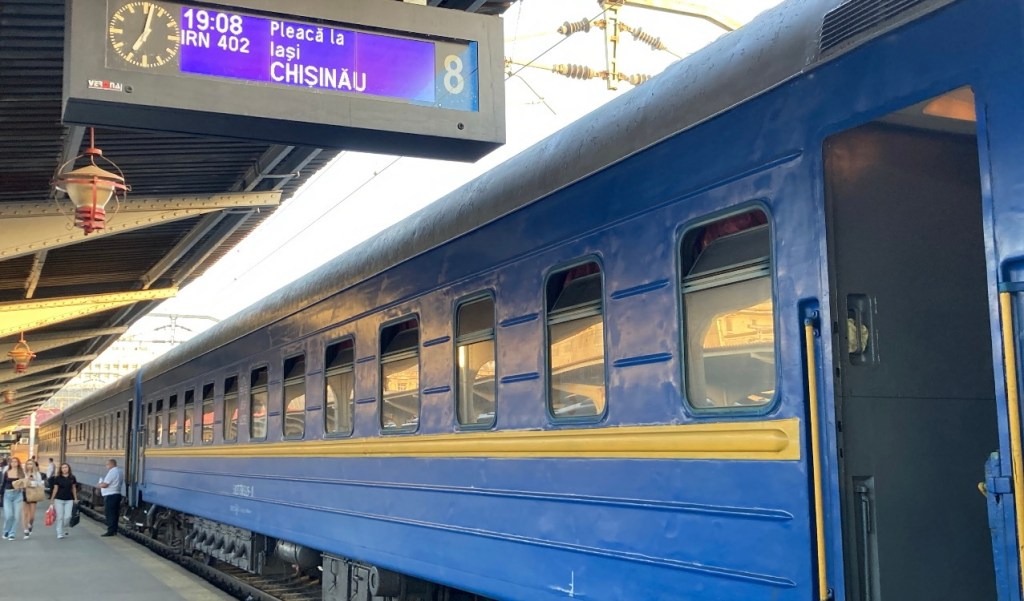
Different countries in Europe have different track gauges. The so-called standard gauge has a width of 1435 mm (Kapeller, 2023). With a few exceptions, this has largely become established in countries of the European Union (Lindner, 2022). There is also the narrow gauge, which has a common width of 760 mm or 1000 mm. Finally, there is the broad gauge with a width of over 1435 mm, such as the Russian gauge of 1520 mm. Consequently, the Trans-Siberian Railway runs on this gauge (Kapeller, 2023). The broad gauge can also be found in Spain, Portugal and Finland (Lindner, 2022). The Bucharest – Chișinău connection shows that different track gauges can be an obstacle for night train services. Here, the train’s wheelsets are changed at the border in the middle of the night, causing noise disturbing travellers‘ restful sleep.
Differences in electrification
It is also important to address the different power supplies in the European railway network, which can be an obstacle to night train services. While Danish trains, for example, run on alternating current with a voltage of 25kV and a frequency of 50Hz, neighbouring Germany deviates from this standard. The network there is only electrified with a voltage of 15kV. If the rolling stock and locomotives can be separated, which usually is the case with night trains, the locomotives can be changed at the national borders. This means that passengers do not have to change trains. However, changing locomotives is associated with time, financial and personnel costs (Lindner, 2022).
Taxation of competing means of transport
In addition to day trains, which usually cover a distance in a shorter time, night trains mainly compete with airlines. The latter in particular have a clear advantage in terms of taxation. A look at Germany shows that international flights are not subject to any VAT, whereas cross-border rail journeys are subject to 7% VAT. While rail travel in Germany is subject to the second-highest electricity tax rate in Europe and has to pay eco-tax, air transport is completely exempt from fuel tax (Allianz pro Schiene, n.d.). This creates a cost advantage for air transport, which shifts demand away from night trains and towards mostly low-cost carriers. Expressed in figures: On average, a train journey is twice as expensive as a flight (Greenpeace, 2023).
Track access charges to be paid
For every kilometre that a night train travels, its operator must pay money for the use of the railway. This amount is called the track access charge and varies greatly across Europe. While Germany, for example, charges 2.76€ per kilometre, Hungary charges 8.48€ (Bundesministerium für Digitales und Verkehr, 2024). As night trains travel very long distances, the cost of the rail usage fee is correspondingly high. Expressed in figures: The rail usage fee accounts for 10 to 20% of the total costs (Unsere Bahnen, n.d.).

Outdated and missing rolling stock
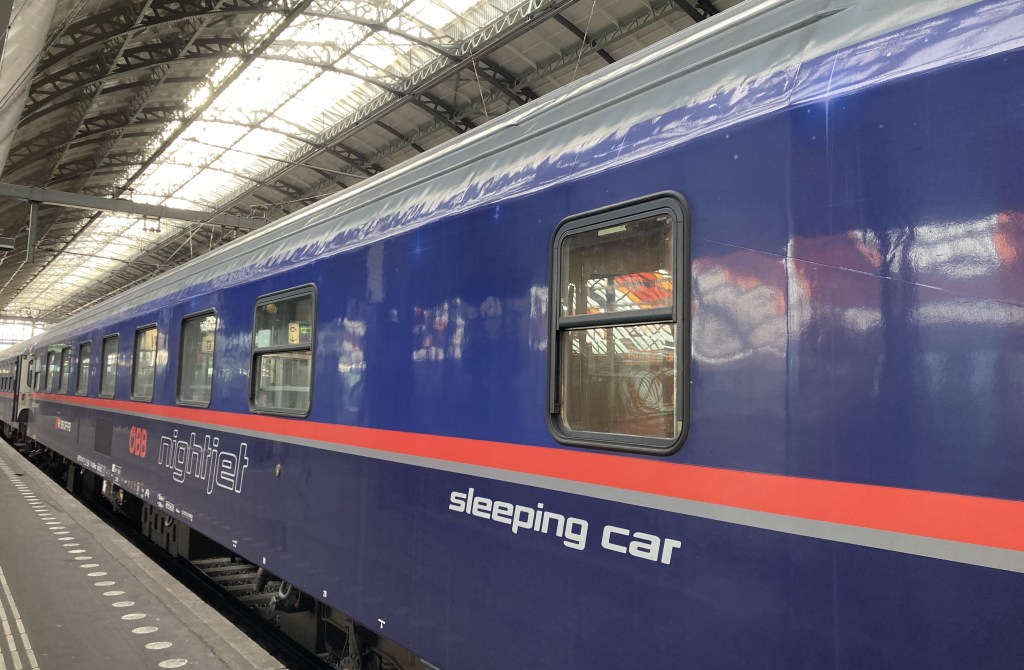
Short-term repair work on the mostly old night train carriages can have unpleasant consequences for travellers. According to Hafner (2024), SBB and ÖBB night trains lack up to 20 beds per night. As a result, travellers usually have to spend the night in a seat rather than in their booked beds with the included breakfast.
As you can see, night trains in Europe have to contend with a number of obstacles. In particular, the unequal treatment in terms of taxation compared to air travel is a major hurdle. A tax adjustment and consequently more expensive flight tickets could be a lever to encourage price-sensitive travellers in particular to switch to night trains. Countries should also reduce or even abolish their track access charges. Belgium can be cited as an example here, as the costs of using the railway are reimbursed by the state (Unsere Bahnen, n.d.). At the moment, Europe is also in the process of further harmonising its rail networks. In Finland, for example, there is a debate about converting the railway network to standard gauge (Lindner, 2022). However, much remains to be done to further standardise the patchwork of the European rail network, which would benefit night trains.
Sources:
Allianz pro Schiene (n.d.). Die Rückkehr der Nachtzüge. Retrieved on 28.02.2025, from https://www.allianz-pro-schiene.de/themen/personenverkehr/nachtzuege/
Bundesministerium für Digitales und Verkehr (2024, 13. December). Studie zur Betrachtung der ökologischen und gesamtgesellschaftlichen Bilanz von Nachtzugverkehren auf der Schiene im inter- und intramodalen Vergleich. Retrieved on 03.03.2025, from https://bmdv.bund.de/SharedDocs/DE/Publikationen/E/studie-bilanz-nachtzugverkehre.pdf?__blob=publicationFile
Greenpeace (2023, 21. July). Unfairer Preiskampf: Zug und Flug im Vergleich. Retrieved on 02.03.2025, from https://greenpeace.at/news/unfairer-preiskampf-zug-und-flug-im-vergleich/
Hafner, Y. (2024, 24. June). Nachtzüge von SBB und ÖBB: Pro Nacht fehlen bis zu 20 Betten. Retrieved on 02.03.2025, from https://www.srf.ch/sendungen/kassensturz-espresso/espresso/frust-in-nightjets-nachtzuege-von-sbb-und-oebb-pro-nacht-fehlen-bis-zu-20-betten
Jaschinksy, K. (2024, May). Warum es mehr denn je ein starkes Eisenbahnnetz in Europa braucht. Retrieved on 28.02.2025, from https://vcoe.at/blog/detail/warum-es-mehr-denn-je-ein-starkes-eisenbahnnetz-in-europa-braucht
Kapeller, R. (2023, 11. October). Eisenbahn einfach erklärt: Die Spurweite. Retrieved on 28.02.25, from https://blog.railcargo.com/de/artikel/die-spurweite-
Lindner, L. (2022, November). Stand der technischen Harmonisierung der Eisenbahnsysteme in der Europäischen Union. Retrieved on 02.03.2025, from https://bahn-fuer-alle.de/wp-content/uploads/2022/11/eisenbahnsysteme_der_europaeischen_union.pdf
Unsere Bahnen (n.d.). Nachtzüge in Europa: Eine Renaissance mit vielen Hürden. Retrieved on 03.03.2025, from https://www.unsere-bahnen.at/2024/01/17/nachtzuege-in-europa-eine-renaissance-mit-vielen-huerden/
 Nights on Tracks
Hinterlasse einen Kommentar